
Why are prices rising faster again?
Inflation rose to 3.5% in September, a week before the Budget. The parties blame different things. Here is what the figures show, and what drives the cost of living now.
What drove UK inflation up to 3.5% in September 2026, and how much of it comes from fuel, energy policy and home-grown pressure?
Part 1
What this is about
Inflation is the rate at which prices rise. The official measure, the consumer prices index (CPI), tracks the cost of a large basket of goods and services that households buy, from bread and bus fares to rent and holidays. The Office for National Statistics (ONS) publishes it every month, comparing prices with the same month a year earlier.
On 21 October the ONS said prices rose by 3.5% in the year to September 2026, up from 3.1% in August. That is the third rise in a row, from a low of 2.6% in June. The Bank of England's job is to keep inflation at 2%. For comparison, inflation peaked at 11.1% in October 2022.
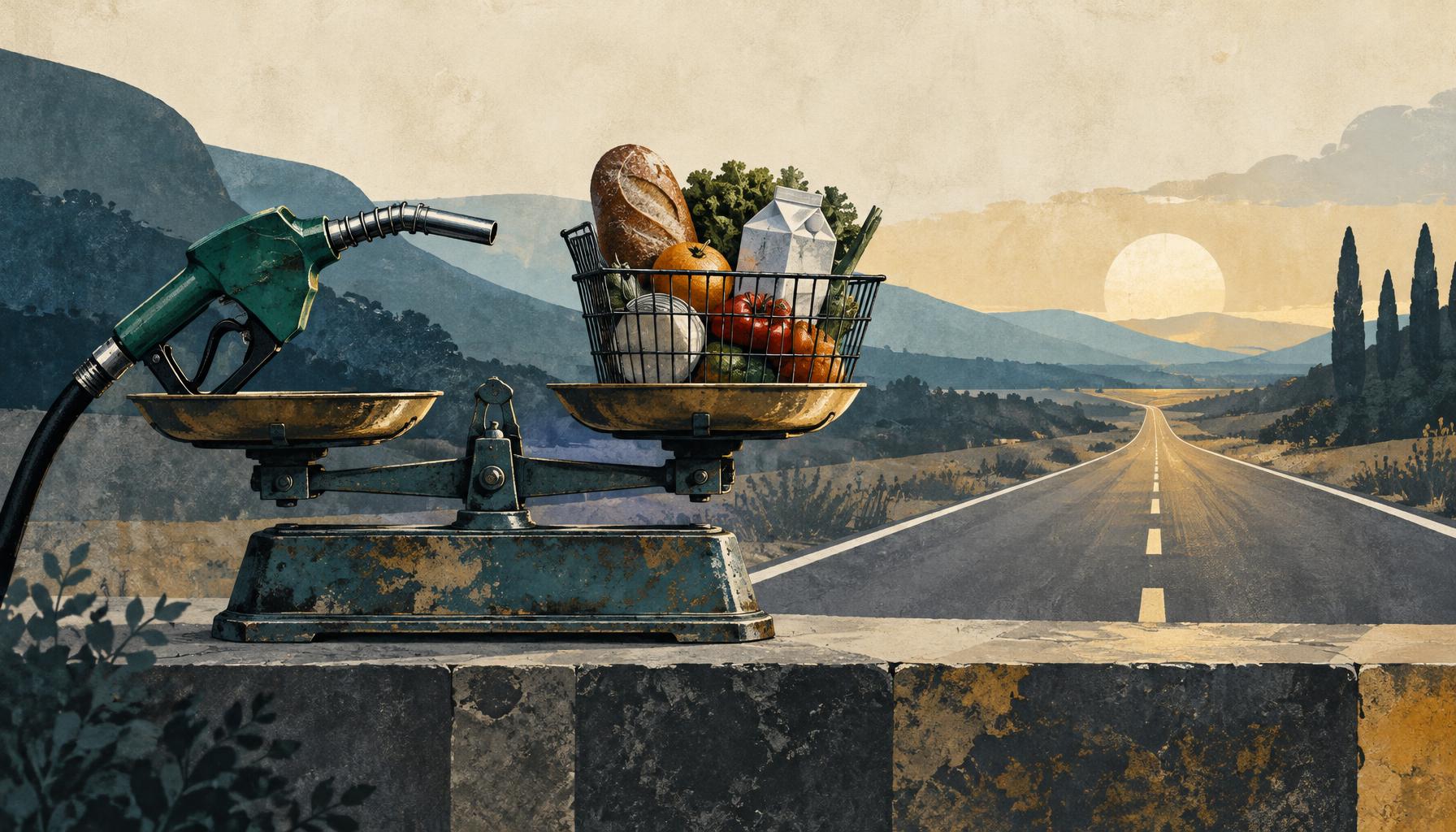
This year's rise is mostly about oil. Conflict in the Middle East broke out on 28 February 2026, according to the ONS, and the Bank of England says it has pushed up crude and refined energy prices. Petrol has risen from about 130p a litre in February to about 170p, according to the Bank's Governor. In September, motor fuel prices were 29.8% higher than a year before.
Inflation matters well beyond the petrol station. When prices rise faster than pay, people can afford less. It also shapes the Bank's decisions on interest rates, which feed into mortgages and savings. And the September figure is the one usually used to decide how much most benefits rise the following April, so it affects millions of households and the government's own spending.
The figure landed a week before Chancellor John Healey's Budget on 28 October. On the same day, the parties were arguing about who or what was to blame.
3.5%
Inflation in the year to September 2026
ONS. The Bank of England's target is 2%.
29.8%
Rise in motor fuel prices over the same year
ONS
6%
Share of a typical energy bill that is policy costs
Ofgem, October to December 2026, Direct Debit
Explainers
The same story in the format that suits you: watch it, listen to it, or take it in at a glance.
AI-generated overviews (NotebookLM) · Made automatically by Google NotebookLM from this page. If a figure differs, the figures on this page are the checked ones.
Part 2
What's being said
“Price rises from conflicts in the Middle East and Europe are hitting Britain”
John Healey, Chancellor · 21 October 2026
GovernmentHow it was used
Response to the September inflation figures on 21 October. He set it beside the approval of the Jackdaw gas field and next week's Budget.
How it could mislead
It points only to events abroad. Core inflation, which leaves out energy and food, is also above target and rising, so not all of the pressure comes from overseas.
What the figures say
The Bank of England says direct energy effects, mostly motor fuels, explained 0.7 percentage points of a 1.1 point overshoot in August. Core inflation rose to 2.8% and services inflation to 3.7%.
“Red tape and net zero costs that are driving up the cost of living”
Andrew Griffith, Shadow Chancellor
ConservativeSource neededHow it was used
Response to the inflation figures on 21 October, urging the Chancellor to tackle the deficit in the Budget and cut these costs.
How it could mislead
Green levies do add to energy bills, but the ONS and the Bank of England put this year's rise down mainly to motor fuel prices.
What the figures say
Policy costs are 6% of a typical energy bill, says Ofgem. They fell from £236 to £106 a year in April 2026 after Budget 2025 changes. The ONS names motor fuels as the largest upward contribution in September.
“Inflation is running out of control”
Robert Jenrick, Reform UK
Reform UKSource neededHow it was used
Response to the inflation figures on 21 October. He went on to say the Prime Minister would not make the choices that would cut bills.
How it could mislead
It suggests prices will keep speeding up. Whether they do depends largely on oil and gas prices, which no one can forecast with confidence.
What the figures say
Bank of England staff expect inflation of about 3.75% at the end of 2026 and slightly above 4% early in 2027. The Bank held interest rates at 3.75% in September; three of nine members voted for a rise.
Part 3
What the figures show
What drove September's rise
The ONS breaks the basket into groups and shows how much each adds to the total. In September, transport added 0.94 percentage points to the 3.5% rate, the largest part of it from motor fuels. Petrol averaged 169.5p a litre and diesel 192.5p, the highest since summer 2022. Heating oil (kerosene) was up 22.7% on a year earlier.
Other prices were calmer. Food inflation was 1.3%, unchanged from August. Hotel prices rose more slowly, which pulled the total down a little. But core inflation, which strips out energy and food, rose from 2.6% to 2.8%, and services inflation from 3.4% to 3.7%. The Bank of England expects higher fuel costs to spread into other prices over the coming months.
Annual change, selected CPI measures (ONS)
Where inflation has been
Inflation hit 11.1% in October 2022, the highest since the official series began in 1997. It was still 3.8% in September 2025, then fell to 2.6% by June 2026 before the oil shock pushed it back up.
The Bank of England held its interest rate at 3.75% in September. Three of its nine policymakers wanted a rise to 4%. Bank staff expect inflation of about 3.75% at the end of this year and slightly above 4% early in 2027.
Annual rate, % (ONS)
Sourced anchor years only — no intermediate values are shown.
Energy bills and what comes next
Home energy has risen less than petrol so far. Ofgem's price cap for a typical household is £1,723 a year from October to December, up 4%, which Ofgem puts down to higher wholesale gas prices caused by the conflict. The government has removed VAT from electricity bills until the end of March 2027. In April, policy costs on a typical bill fell from £236 to £106 a year after changes in Budget 2025.
The bigger test may come in January. In September, the Governor of the Bank of England wrote that the cap was expected to rise by a further 24% in the first quarter of next year.
Who feels it
Regular pay grew by 3.7% in the three months to August. After rising prices are taken into account, the ONS puts the real rise at 0.6%, so most workers are only just keeping ahead. Drivers, rural households using heating oil and businesses that move goods are hit harder by fuel costs.
Benefits usually rise each April in line with inflation in the year to the previous September, says the House of Commons Library. This April most benefits rose by 3.8% and the state pension by 4.8%. September's 3.5% figure therefore feeds into next April's increases and into the government's spending plans.
What the parties propose
The government has extended the 5p cut in fuel duty to the end of 2026. Under current plans duty would rise from 52.95p to 55.95p a litre in January, with final rates to be set in the Budget. At Prime Minister's Questions, Andy Burnham said ministers would look at removing standing charges from gas bills. The Conservatives say they would repeal the Climate Change Act, axe the carbon tax on electricity generation and back North Sea oil and gas.
Reform UK says it would scrap VAT and green levies on household energy bills. The Liberal Democrats propose taking the Renewables Obligation levy off bills, paid for by a windfall tax on banks. The Greens say they would move policy costs off bills, funded by a tax on wealth above £10 million.
The other side
- Some pressure is home-grown Core inflation and services inflation are both above 2% and rising. Three Bank of England policymakers voted to raise rates in September, which suggests concern that price rises are spreading beyond energy.
- Policy costs are real Green levies still make up about 6% of a typical energy bill, and carbon pricing affects the cost of electricity. Cutting them would lower bills, though someone else, such as taxpayers, would then pay for the schemes.
- Forecasts can shift fast The Bank's projections rest on energy prices in mid-September. A fall or a further jump in oil and gas prices would change the outlook quickly, in either direction.